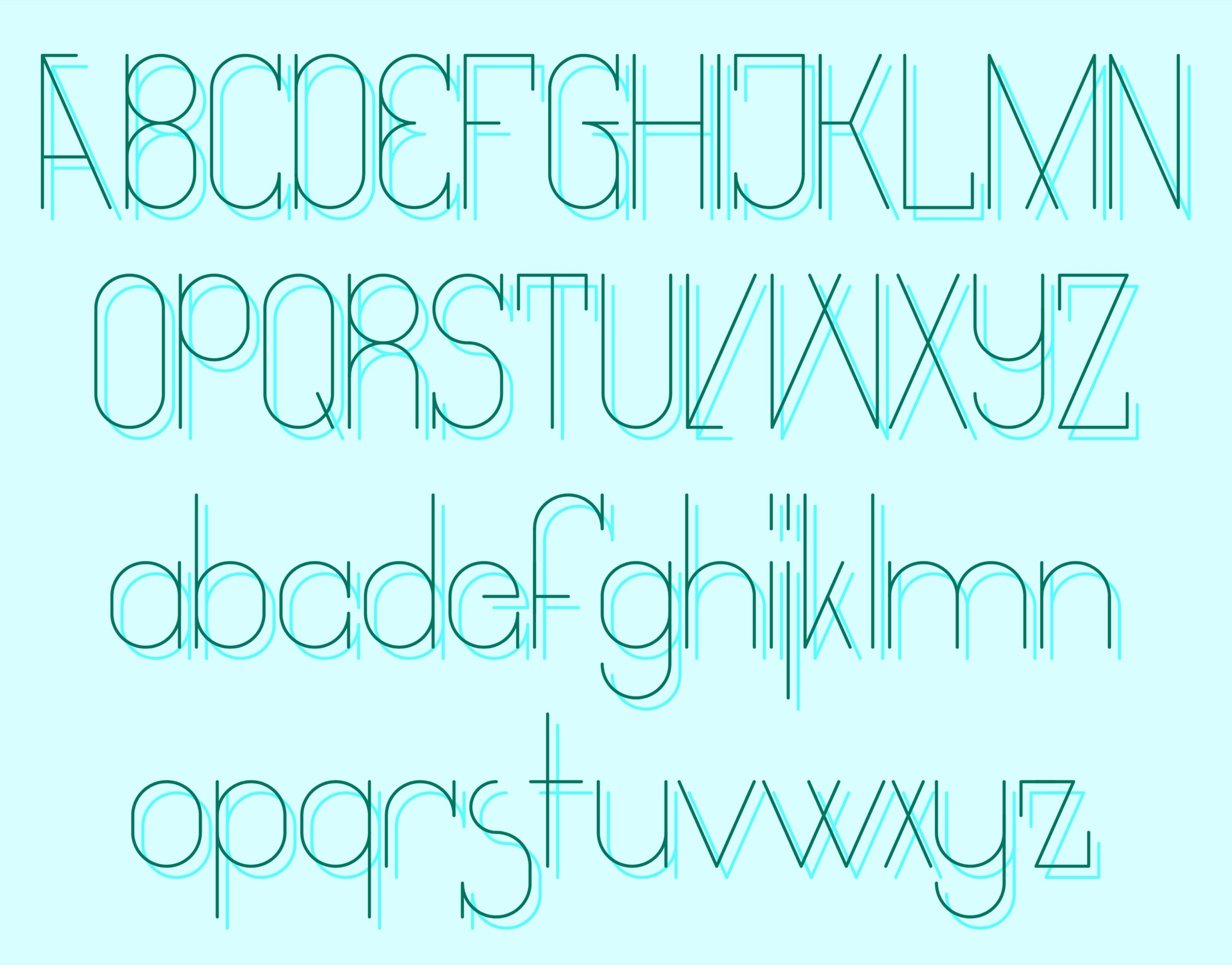
-
Working on September’s alphabet got me thinking about why I am drawn to creating fonts, and how this is informed by my broader experience of life as a designer.
Sometimes working in a field that is still new to you brings into focus thoughts that are suppressed in areas of work governed by long-established tactics.
Designing a font is a process that shares characteristics with other design activities I find interesting, like my pattern designs and my Impossible Cities - I like to establish rules, but within an open-ended framework. A pattern can be viewed individually, or repeated a hundred-fold. Letters can be put together in infinite ways.
It also draws upon skills (and probably habits) acquired over three decades of architectural practice, and applies them at a scale small enough that I can carry out projects without support. In Architecture there is always a push and pull between conflicting impulses. On the one hand, defining rules enables both practical benefits such as efficiency through standardisation, and visual consistency, clarity and harmony. On the other, the decision to break rules can be crucial in overcoming the idiosyncrasies of a site or existing building, and can, through contrast, bring life to the design as a whole.
Once I have set the rules for a project I find it very hard to break them, though doing so can be the transformative moment for a design.
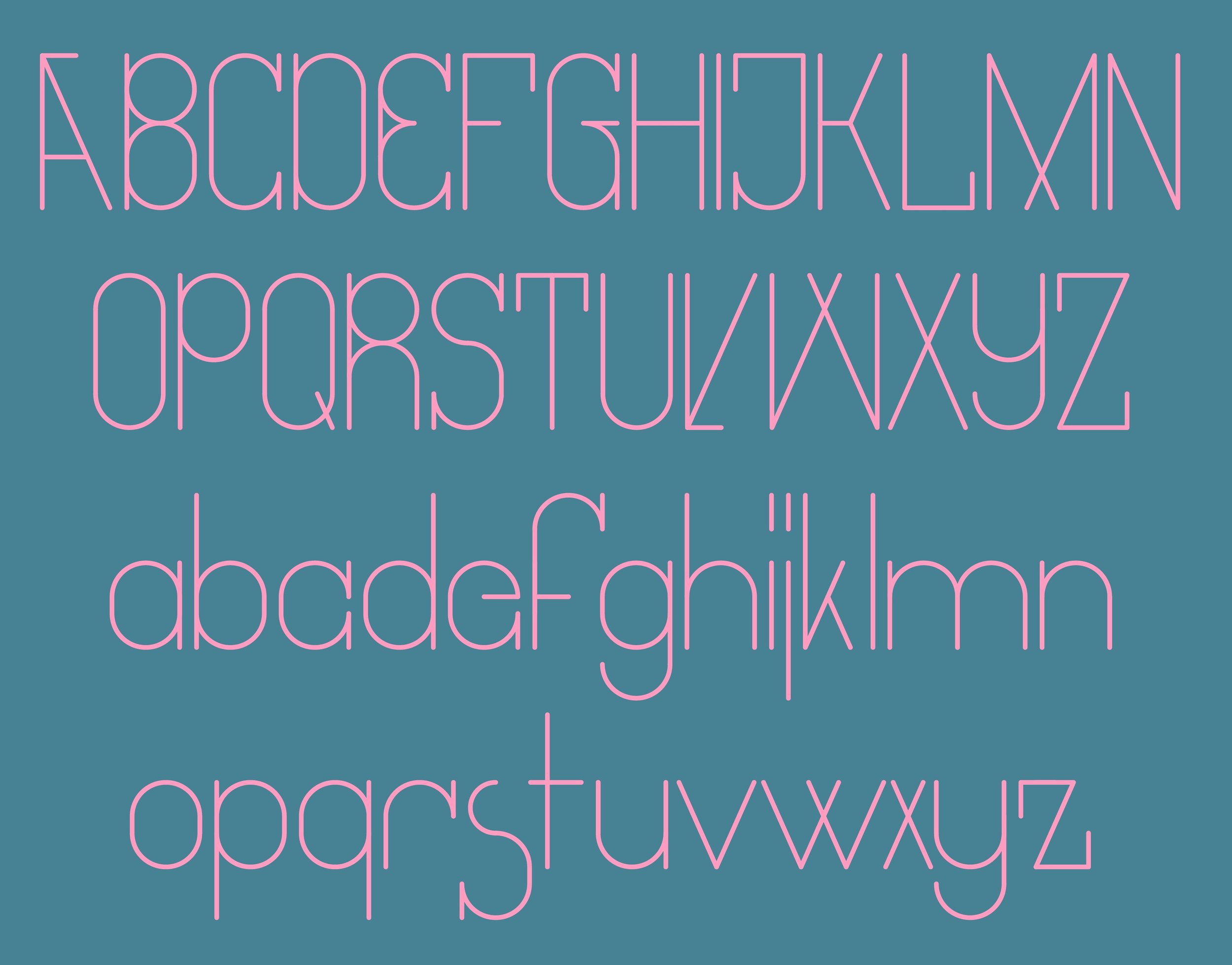
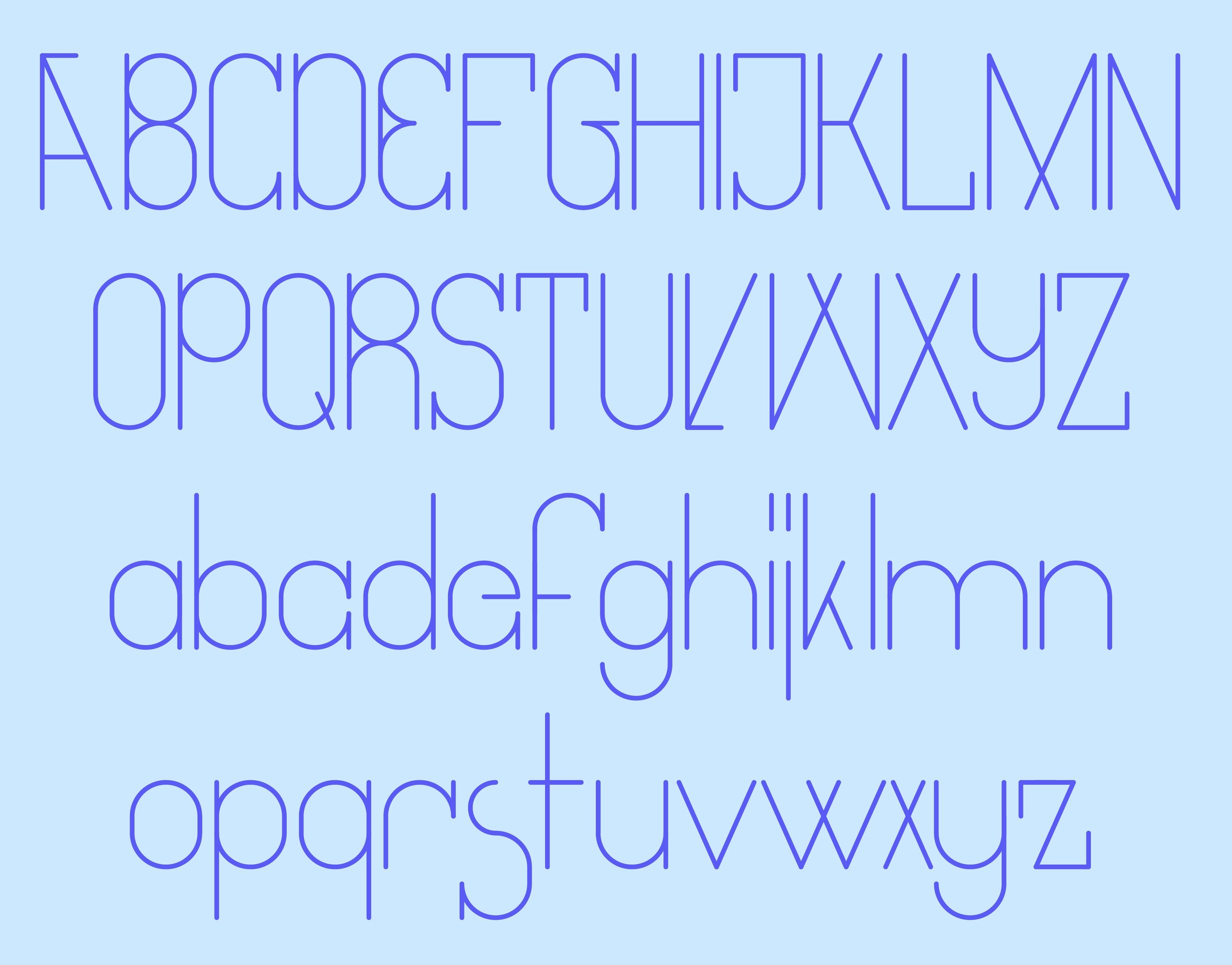
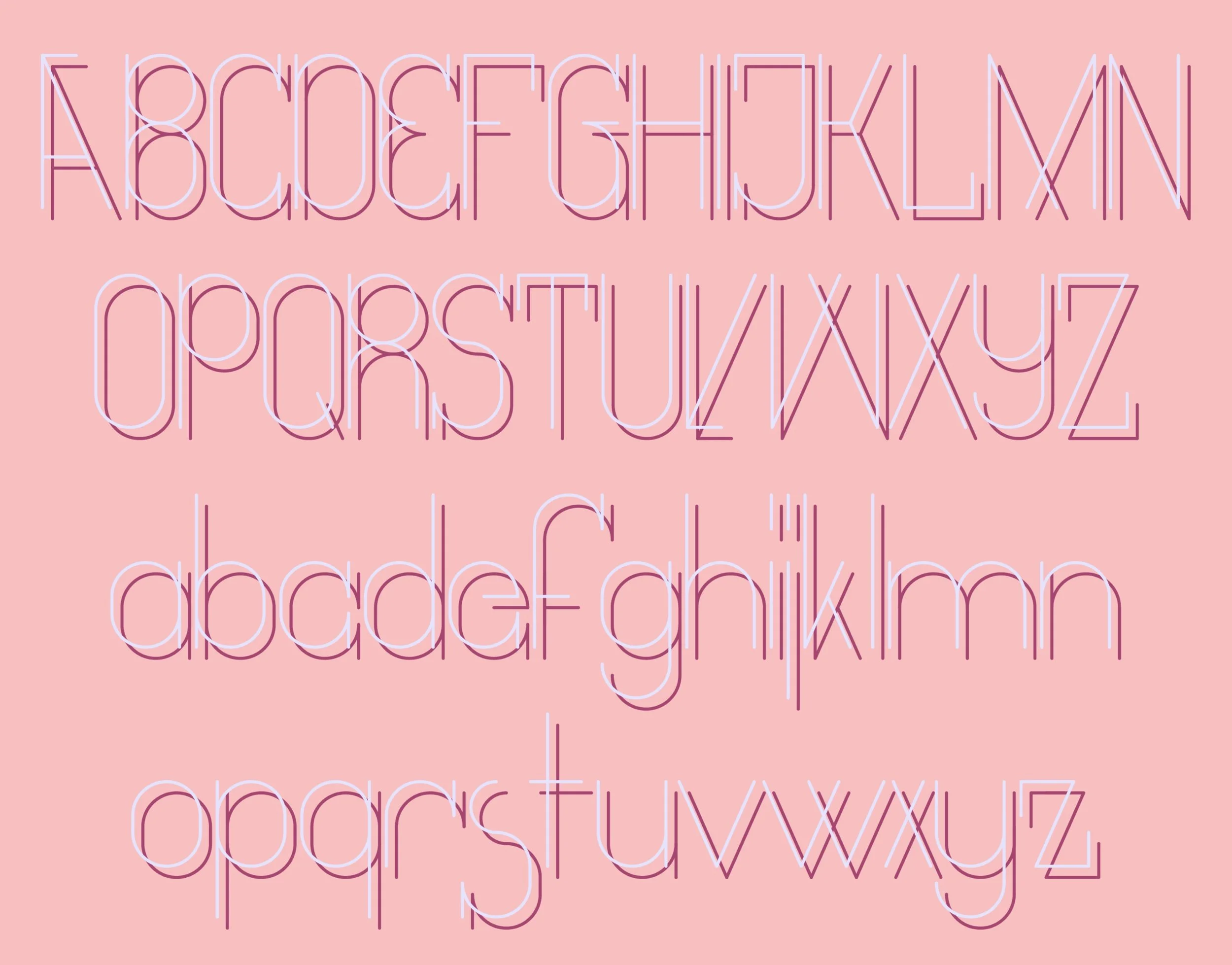
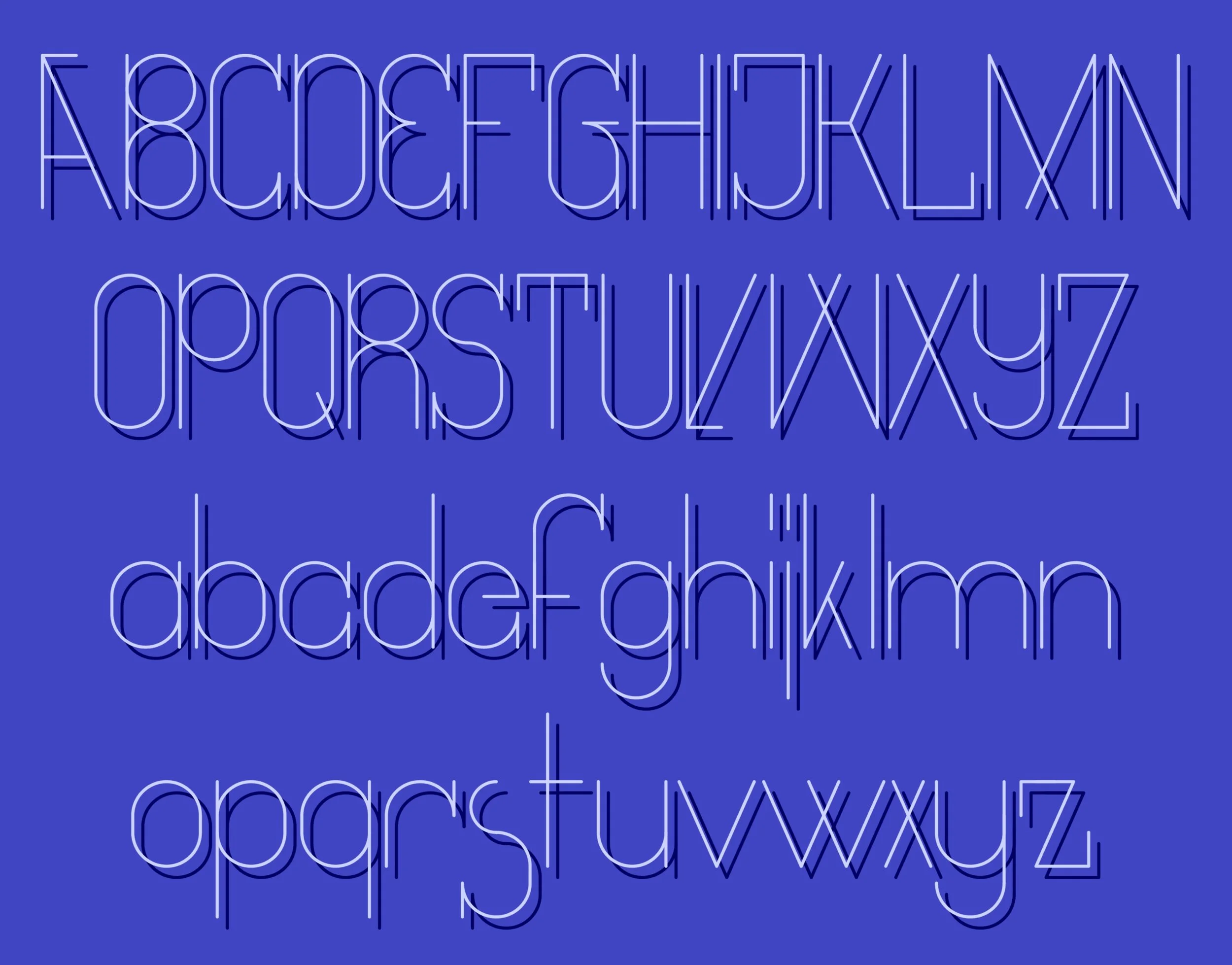
I spent longer than is probably sensible pondering the lower case ‘s’ in September’s alphabet. Eventually I decided that the liveliness it provided to the font, and the solution it created to an inflexibility inherent in the overarching font geometry (in this case an inflexibility that I was solely responsible for), made its rule-breaking acceptable, and that it did not compromise the consistency of character of the whole.
These types of decision may seem incredibly minor in the broader scheme of things, but I feel capture in microcosm a crucial imperative: the necessity in all design activity of constantly questioning the balance between order and chaos. Rigid order can be stultifying, but breaking that order must always prove its value, as novelty can often be a disguise for wilfulness, compromise, or expediency, and can easily run out of control, corrupting the whole.
I miss the collaborative nature of large architectural projects, but I do enjoy the simpler process that comes from having only myself to please - it might sound conceited, but I’m a great client to work for (apart from the part that relates to paying…).
Year of Alphabets 7: September
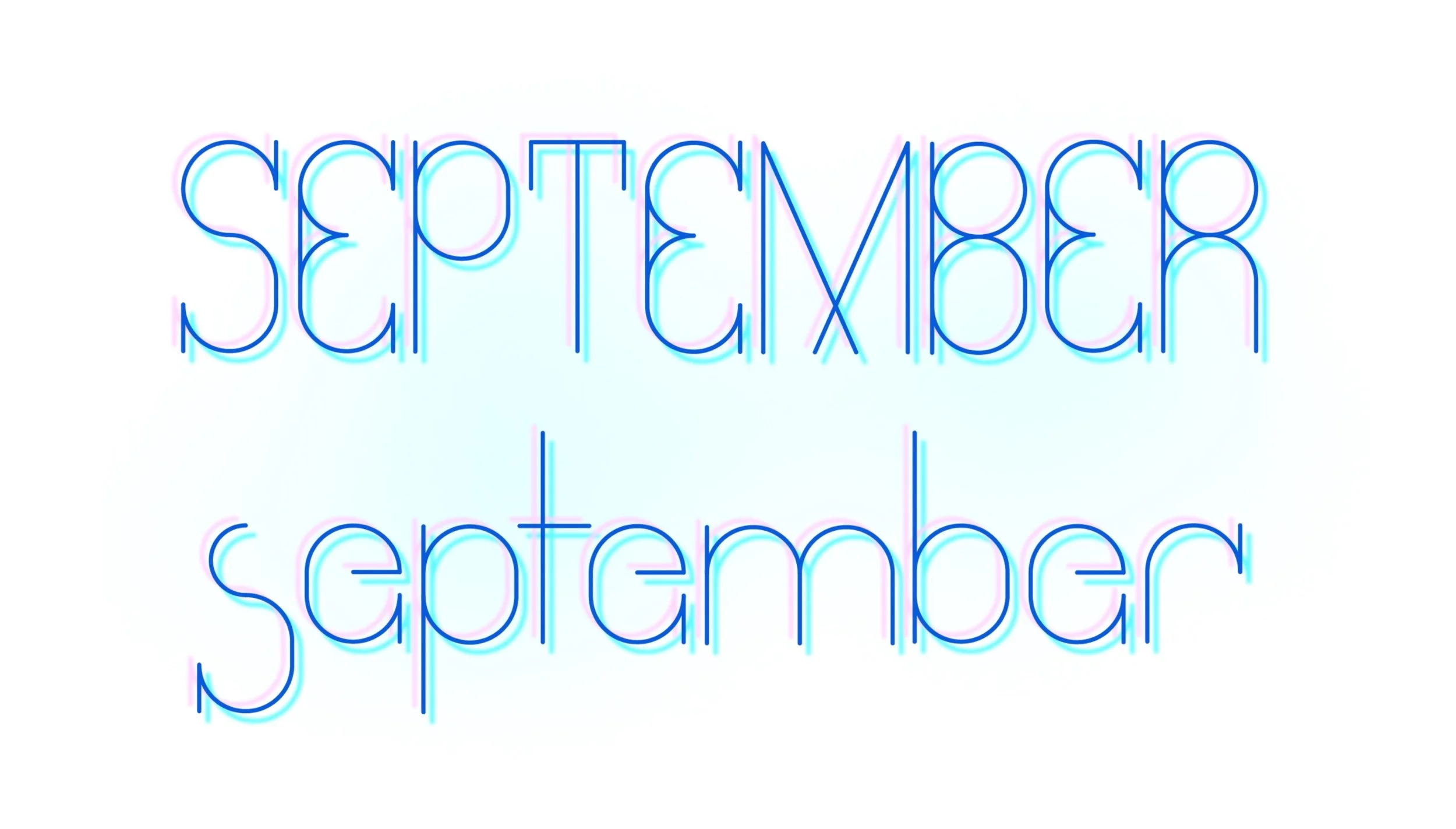
-
![]()
Regular weight - colourway 1
-
![]()
Regular weight - colourway 2
-
![]()
Light / Shadow - colourway 1
-
![]()
Light / Shadow - colourway 2
-
![]()
Light / Shadow - colourway 3